

ご挨拶
アーキテクトグランドデザインの豊崎禎久です。
このたび、隔週レポート「AGD半導体ウォッチ」の正式創刊号(第1号)を発行いたしまし
た。第1号より、本レポートは有料の購読サービスとしてお届けいたします。
第1号の主題は、アンソロピックの上場目論見書(S-1)が明かした「1兆ドルの約束」で
す。同社が将来にわたって負う最低支払い義務の大きさと、その網が計算資源の提供者た
ちへどう広がっているのかを、目論見書の数字そのものから読み解きました。あわせて、
プロセッサの陰で静かに効いているメモリ(HBM)とパッケージのボトルネック、供給制
約の実像にも触れています。
編集・分析は、AGD専門チームが担っています。私たちは、未来を予測し、記録し、現実
で検証する。その循環を、隔週のレポートとして積み重ねてまいります。
購読料は、標準で年120,000円(税別)、創刊記念として2027年3月末までのお申し込みに
限り年98,000円(税別)にてご提供いたします。同一社内5名様までの法人ライセンスは
年600,000円(税別)です。購読のお申し込み・お問い合わせは、リサーチディレクター
の中山( handotai-saiseichou@a-gd.jp )までお願い申し上げます。
半導体の「王道」を見据えた分析を、これからもお届けしてまいります。今後ともご指導
のほど、よろしくお願い申し上げます。
アーキテクトグランドデザイン株式会社
創業者兼ビジョナリスト/半導体アナリスト
豊崎 禎久


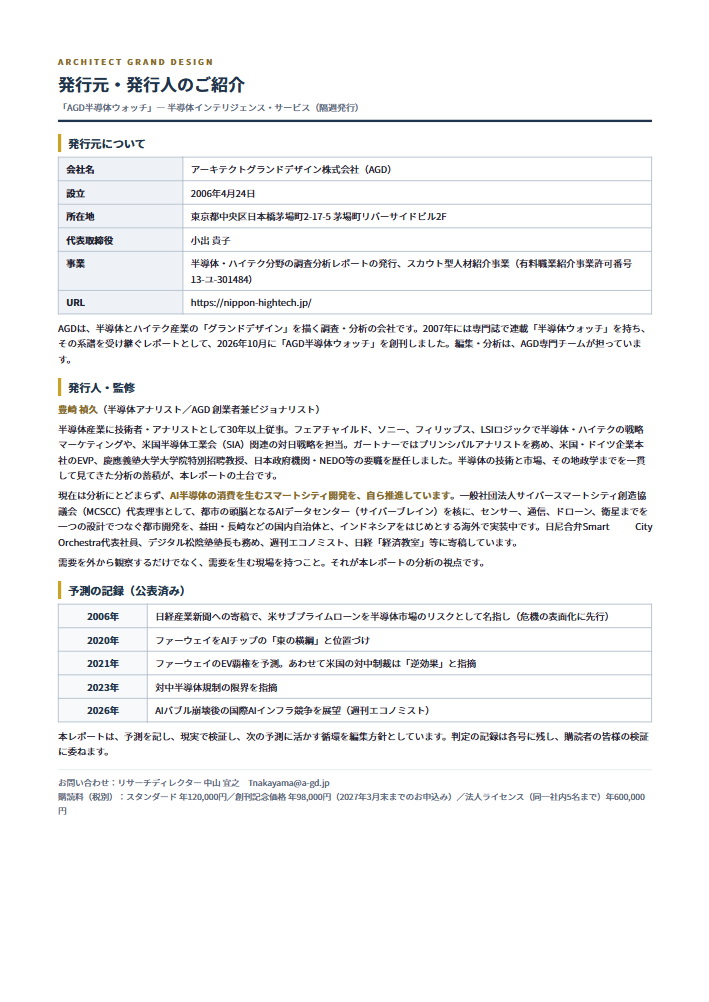
発行元・発行人(日本語)
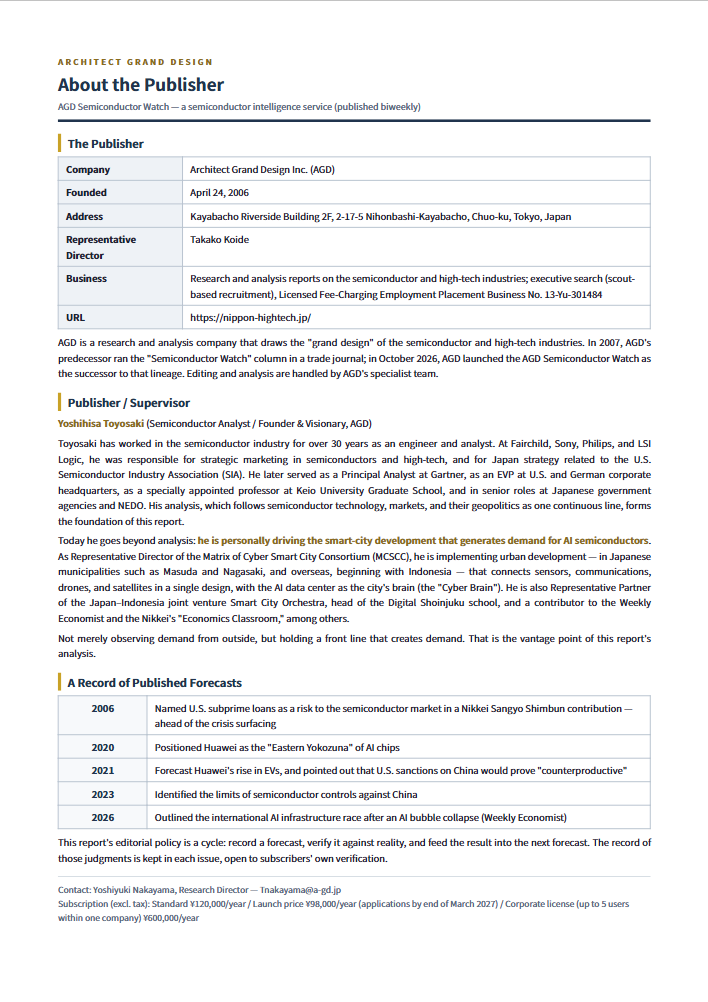
発行元・発行人(英語)
リサーチプラン(日本語)
research plan(English)
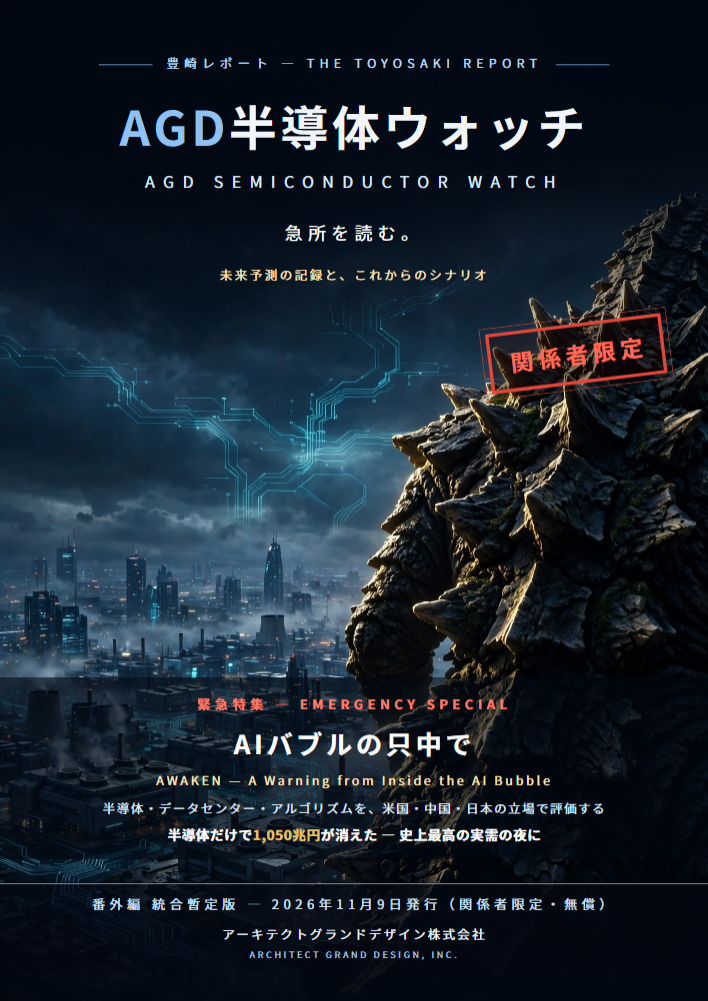
緊急レポート第5号
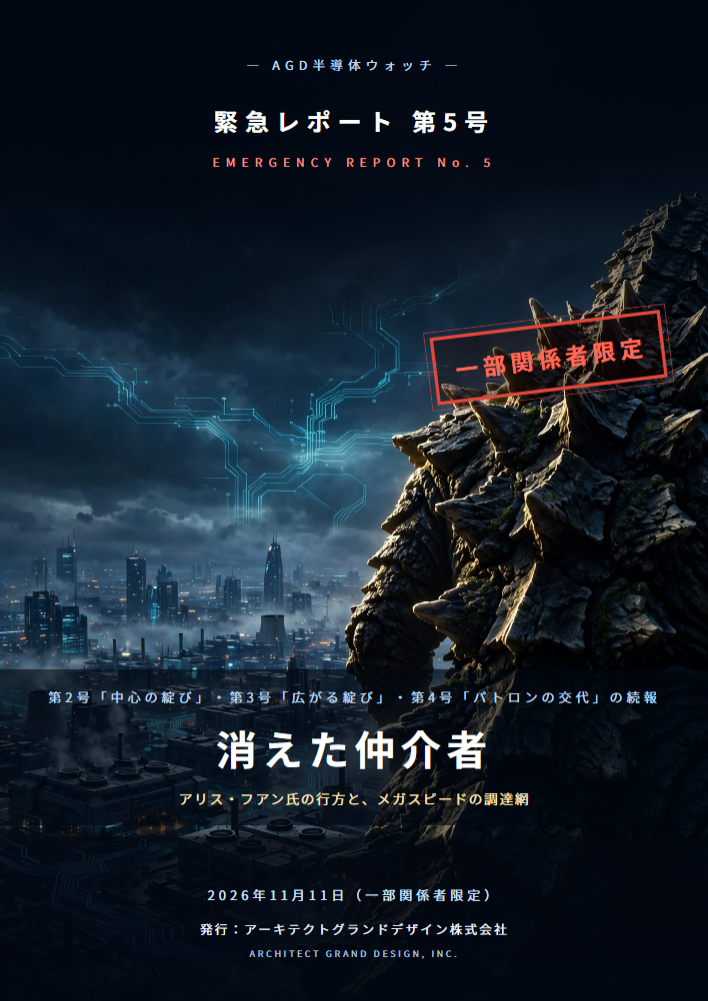
第5号「消えた仲介者」 / Emergency Report No. 5 — “The Vanished Intermediary”
AGD半導体ウォッチ緊急レポート第5号「消えた仲介者」を発行しました(一部関係者限定・有償)。
AGD Semiconductor Watch Emergency Report No. 5, “The Vanished Intermediary,” is out (distribution limited to selected recipients).
綻びの先に見えたのは、一人の人物の私行ではなく、半導体を買い、運び、貸し出すために組まれた調達網でした。結節点のメガスピードは、衣替えから2年余りで48億ドルを超える先端AI機器を買い付け、総資産は1年で約90倍に膨らみました。伸びを追えたシンガポールの区分は開示基準の変更で姿を消し、禁輸リストの軍系大学は仲介業者経由でH200を買っていました。大統領は2度の警告を受けていたと報じられ、米国の法の下調査では、厳密な意味の反逆罪は成立せず、戦場は法廷の外にあることが分かりました。全21ページ。
Beyond the fraying lay not one man’s private conduct, but a procurement network built to buy, move, and lease out semiconductors. At its node, Megaspeed bought more than $4.8 billion of advanced AI equipment in just over two years from its rebranding, and its total assets swelled roughly ninety-fold in a single year. The Singapore segment that had allowed the surge to be tracked disappeared from disclosure when the reporting basis changed, and a military university on the export-control list had bought H200s through an intermediary. The President was reported to have been warned twice; a review under U.S. law shows that treason in the strict sense does not hold — the battlefield lies outside the courtroom. 21 pages.
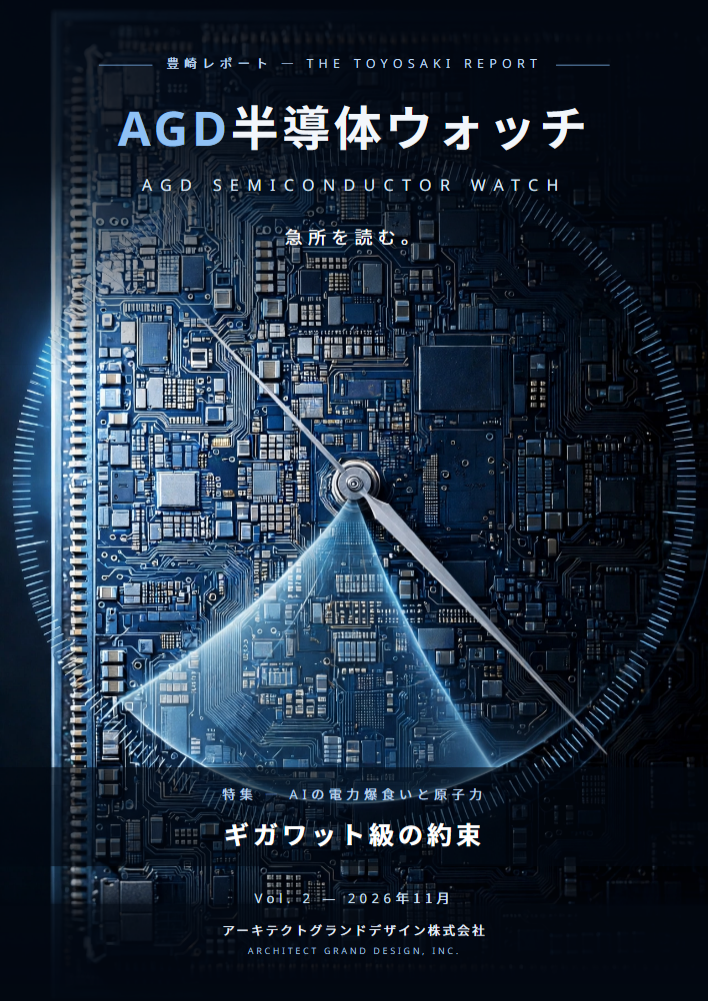
第2号「ギガワット級の約束」 / Vol. 2 — “The Gigawatt Promise”
AGD半導体ウォッチ第2号「AIの電力爆食いと原子力 ― ギガワット級の約束」を発行しました。
AGD Semiconductor Watch Vol. 2, “AI's Power Appetite and Nuclear Energy — The
Gigawatt Promise,” is out.

需要は今、供給は10年先です。テック大手の原発ラッシュを時間軸で分解すると、2020年
代に電力を生むのは閉鎖原発の再稼働で、SMRは2030年代の答えでした。米国の需給を突
き合わせれば、2030年時点で約200TWh、平均約23GWの構造的な不足が残ります。費用の配
分では、送電整備費の62%を住民が負い、ソフトバンクグループの決算には発電設備で
5,972億円の損失が出ました。ベトナムのニントゥアン2号機では日本が主契約の座を降
り、ベトナム自身は国産化と人材育成をパートナー選定の基準に掲げています。電力は半
導体に続く第二の急所です。全9ページ。

Demand is now; supply is a decade away. Decomposed along the time axis, Big
Tech's nuclear rush shows that what generates power in the 2020s is the restart
of closed plants — SMRs are the answer of the 2030s. Set supply against demand
in the United States, and a structural shortfall of roughly 200TWh, about 23GW
on average, remains in 2030. In the allocation of costs, residents bore 62% of
the transmission build-out, and SoftBank Group's earnings carried a ¥597.2
billion loss on power-generation equipment. At Vietnam's Ninh Thuan Unit 2,
Japan stepped down from the prime contractor's seat, while Vietnam itself has
made localization and human-resource development the criteria for choosing its
partner. Power is the second chokepoint, after semiconductors. 9 pages.